
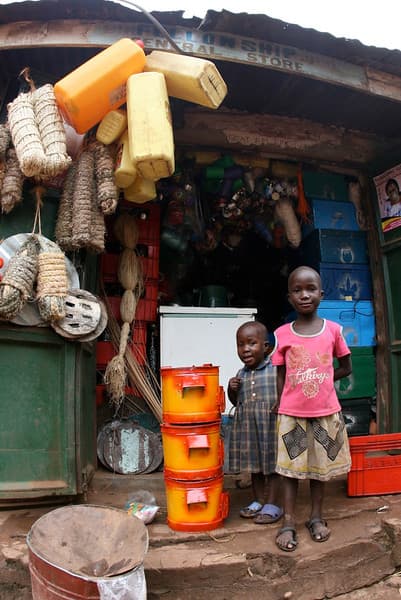
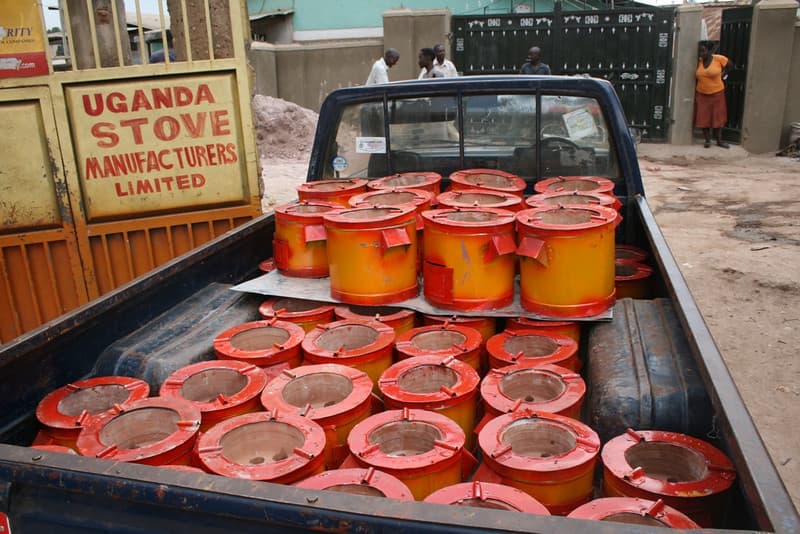

One of the main causes of forest degradation in Uganda is the use of wood fuels for domestic and institutional cooking. More than 95% of Ugandans rely on solid fuels for cooking, typically charcoal or wood for urban dwellers, and wood for rural households. A series of focus groups held in 2005 in three Kampala divisions concluded that the most common domestic cooking device in urban areas was the traditional metal charcoal stove, followed by the three-stone wood fire which is in use by an urban minority. Institutional cooking was found to be mostly firewood based.
The project reduces green-house emissions by disseminating fuel-efficient stoves. The improved charcoal stove reduces fuel consumption by introduction of an insulated combustion chamber which increases combustion efficiency and retains heat. While these stoves will significantly reduce greenhouse gas emissions, they simultaneously provide co- benefits to users and families in the form of relief from high fuel costs and reduced exposure to health- damaging airborne pollutants.
Social and Sustainability Benefits
The project is contributing to sustainable development:- Mothers and children will be exposed to fewer hazardous air pollutants through reduced emissions of carbon monoxide and fine particulate matter. Air pollution from cooking with solid fuel is a key risk factor for childhood pneumonia as well as many other respiratory, cardiovascular, and ocular diseases.
- Biodiversity will be improved through the stove program reducing pressure on remaining forest reserves. Uganda is home to more than 5,000 plant species, 345 species of mammals, and 1,015 types of birds
- The improved stoves give rise to employment opportunities in manufacturing, distributing, retailing, and maintaining the stoves, as well as in relation to business development and management, and in relation to technological skill.
- The circumstances of poor families will be improved by a reduction in expenditures on fuel due to the more efficient stoves.


Buy high-quality, high-integrity carbon credits
Browse independently verified projects with CRISP ratings on the Carbon Marketplace (carbonfootprint.store), buy online in minutes and receive proof of retirement for every credit.
Browse the Carbon MarketplaceAlready calculated your carbon footprint?
Enter your tonnes of CO2 and get prices for verified carbon credit projects of any size on the Carbon Marketplace.